![Processing Community Day[s] @Tehran. Processing Week Tehran. Oct 16–22, 2026. Iran Computer Museum • Tehran](/_next/image?url=%2FPCDTehran_HS-II.png&w=3840&q=75)
Processing Week Tehran is a week-long gathering celebrating creative coding, computational art, and open-source culture. The program opens with “Processing Community Day Tehran,” which, alongside specialist presentations, will include a code-art exhibition, a creative-coding experience workshop, and a film screening, and continues for one week.
This program is held to celebrate Processing's 25th anniversary and the global Processing Community Day event.
In this section, selected works of Iranian and international artists are displayed in the treasury space of the Computer Museum of Iran.
This is a digital exhibition bringing together works from a group of generative artists and creative coders from around the world. These artists redefine the boundaries of visual art through coding and diverse algorithms, showing how computers can become tools for aesthetic expression, emotion, and meaning. A wide range of approaches and styles is on display, from motion graphics and abstract design to algorithmic reinterpretations of Impressionist painting styles.
{ curated by: Pedram Sadegh-Beyki
, hours: [ 20:00 , 11:00 ]
, place: "Iran Computer Museum"
}
{ کیوریتور: پدرام صادقبیکی
, زمان: ۱۱:۰۰ تا ۲۰:۰۰
, مکان: موزه کامپیوتر ایران
}
The goal of this program is to provide a platform for interaction between art and technology, inspire audiences, and showcase the emergence of a new aesthetic in the digital age — an aesthetic where code is not merely a tool, but a medium for thinking, feeling, and artistic creation.
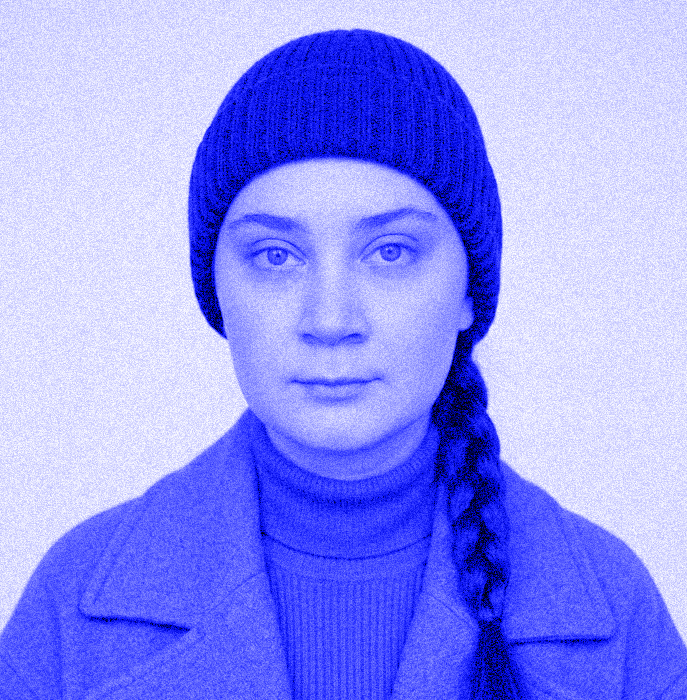
Zahra Zargari is a creative technologist, developer, and visiting instructor of architecture. Her background spans aerospace engineering, architectural technology, and computational design. Her work revolves around what she terms handcrafted and atmospheric computation: warm, dusty palettes, voxel and pixel geometry that feels handmade despite being code-driven, plant-like forms, and calm interactions rather than sensational displays.
"Flora" is a generative system that creates a unique flower for each birth date. A flower whose geometry and color range are shaped by the astrological sign and life path number of that date. However, more than introducing a product, this presentation is the story of a journey that began with three rendered leaves from point clouds in Processing, expanded into a layered flower in p5.js, and has today evolved into an interactive garden in Three.js.
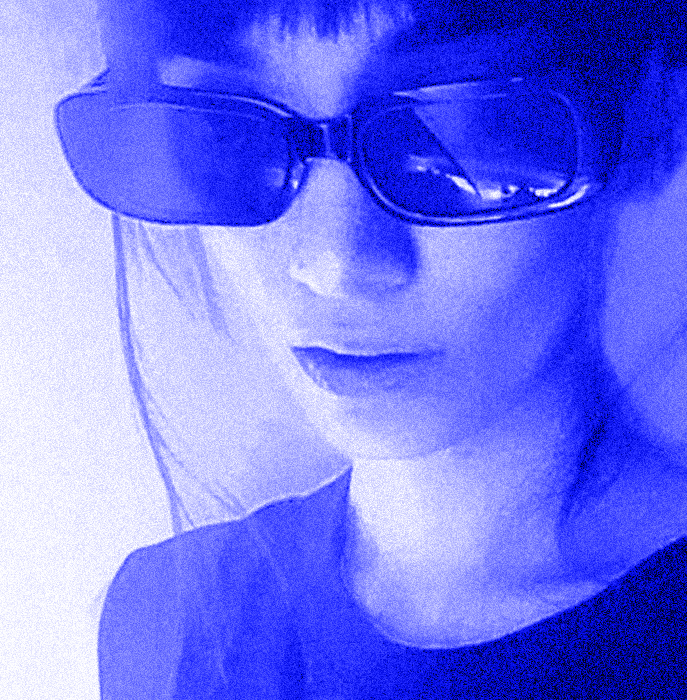
Zahra Moradi is a Tehran-born sound designer, instrumentalist, and composer, active in punk music since 2015. In this talk, she shows how to create and perform live music with a few lines of code using Sonic Pi.
This talk introduces Sonic Pi, an environment for making and performing live music with code. Starting from a first sound and beat, we use synths, samples, loops, and effects to perform a short piece live.
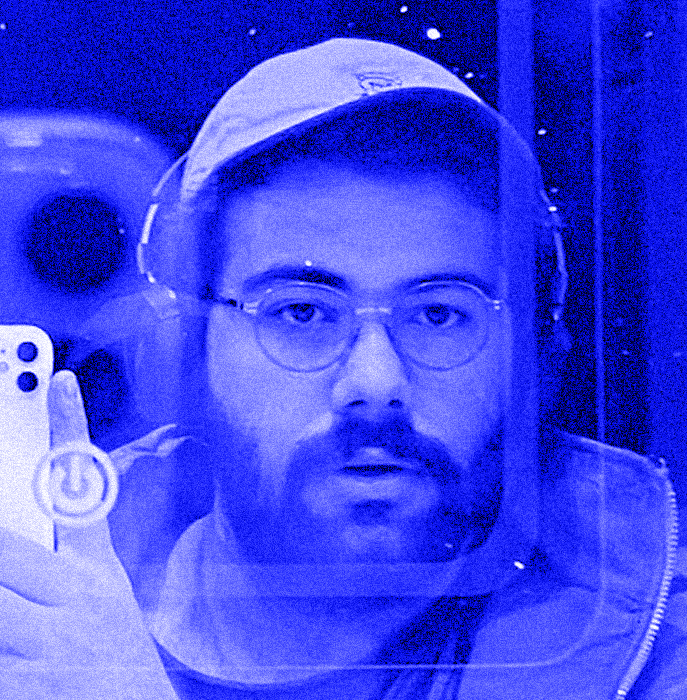
Frame Interpolation, Motion Estimation, and Algorithmic Artifacts with FFmpeg
Mohammadreza Nemati, born in 2002 in Tabriz, works in image production, computer graphics, and programming following his studies in cinema. He has been involved with TouchDesigner and visual programming since 2018, focusing in recent years on C++ programming, graphics systems, and computational image generation processes. In his work, technology is not merely a tool for producing images, but the computational process itself, the algorithm, and its glitches form an integral part of the visual experience.
FFmpeg is commonly known as a tool for converting, compressing, and processing audio and video files. However, its suite of tools and filters can also serve as a framework for creative experimentation and image creation. Centering on transforming a set of still images into a moving video, this presentation explores how a technical, command-line-based tool can be harnessed to generate and manipulate motion.
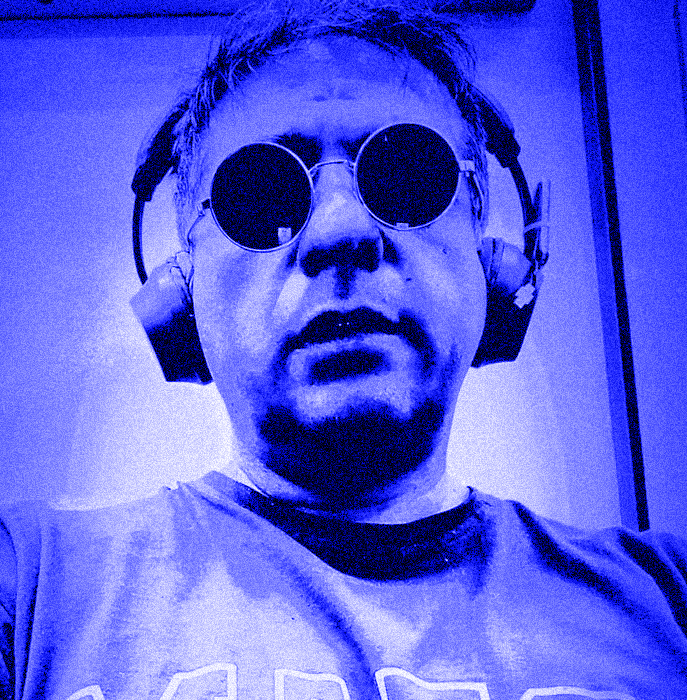
Ali Pourmotamedi (artistic name MahaVoice*) is an artist, engineer, designer, and electronic instrument builder whose professional work lies at the intersection of electronic music, audio engineering, electronics, programming, computer graphics, and interactive arts. His connection to music began at age five with encouragement from his father, discovering artists like Tangerine Dream and Pink Floyd during childhood. Curiosity about the technology behind these sounds led him as a teenager to the Commodore 64, Assembly programming, and real-time VJ system development.
After studying hardware and artificial intelligence, he founded Daris Sepad Electronic / Daris Instruments, initially working on MIDI- and DMX512-based stage lighting equipment. Since 2014, he has actively focused on designing and building analog and digital synthesizers, Eurorack modules, DSP systems, firmware, and AI-driven tools.
He has performed extensively across Iran, participated and performed at Synthposium 2019 in Armenia and the Blaues Rauschen festival in Germany, been interviewed by WDR 3 Germany and the BBC, and presented a 15-part educational series on electronic music on Tehran TV. His approach blurs the line between engineering and art: Idea → Algorithm → Circuit → Firmware → Instrument → Artistic Experience. His current goal is developing a new generation of musical instruments that seamlessly unite music, algorithms, AI, visuals, and human interaction — where a synthesizer is not merely a sound generator, but a language for thinking with sound.
DafTrumma is a hardware and musical project exploring the relationship between rhythm, sound, and image; an interactive drum machine and sequencer that allows rhythms to evolve and take shape rather than simply repeating predetermined patterns. Rhythmic patterns are generated and performed by the instrument, and sequencer data is transmitted wirelessly in real time via Wi-Fi to a computer, where Processing converts these inputs into live visuals synchronized with the music. The special Genetic Pad section, inspired by genetic concepts, enables combining, mutating, and evolving rhythmic patterns, allowing the performer to shape their drum line's evolutionary path like a genetic engineer. Ultimately, DafTrumma aims to elevate the instrument beyond sound generation into a live system for simultaneous creation of music and visuals — where every beat can spark a new idea.
The event's workshops provide an interactive, practical environment for exploring, experimenting with, and learning creative coding. This space allows participants of all skill levels to experience and learn coding in a collaborative setting.
On opening day, Friday, the free introduction to the Creative Coding Experience is registered through the form on this site. Paid workshops run Saturday through Thursday, and their tickets are sold on Evand.
On opening day, Friday October 16, a free introduction to this workshop is held. To attend, choose “Yes” for the workshop on this page’s opening-day registration form. This session has no Evand ticket.
Register for the opening dayParticipants will have the opportunity to explore and experience a variety of creative coding processes. The program is open to participants of all experience and skill levels.
In each session, different algorithms are explored — freely or based on the facilitator's selection — with participants coding together. Anyone interested in creative coding is welcome to join with any software or tools of their choice and use the space to experiment, explore, and create.
This program runs on three separate days, and each day has its own Evand ticket. You can choose one day or several. Capacity is limited each day.
This specialized workshop covers building 3D forms in Grasshopper, transferring geometric data to Three.js, and running them on the web.
Attendees should have a basic familiarity with JavaScript. Prior knowledge of Grasshopper is not required.
Participants must arrive promptly at the scheduled start time.
In this workshop we build a simple, interactive synth using p5.js. Starting with an oscillator, we learn step by step how to control audio parameters with code and end up with a compact, interactive digital instrument.
"A Quarter Century of Processing" reflects on 25 years of innovation in the open-source world. The film shows how Processing has empowered generations of artists, educators, and technology advocates with novel possibilities, continuing to shape fresh avenues for creative expression, learning, and technological exploration.
This documentary takes a poetic look at code and programming as artistic expression. The central topic is Processing, an open-source language that turns code into a digital design roadmap for artists and designers. Through interviews with prominent figures in the community, the film explores how creativity thrives through "process, experimentation, and algorithms." It argues that code is not merely mechanical computation, but a deeply human method of visualizing data and creating new forms.
Code for the People is a twenty-minute documentary directed by Bao Nguyen. Featuring interviews with figures like Matt Mullenweg and Linus Torvalds, it shows how the open web was built and how a few major platforms shape our online experience. With an optimistic tone, the film frames open source around ownership, collaboration, and freedom, closing with a simple call to action: reclaim a corner of the web by owning your domain.
Attending the opening program (Friday, October 16) is free, but registration is required. Use the form at the bottom of this page.
Tickets for the week's workshops (Saturday to Thursday) are sold through Evand.
The Iran Computer Museum is a space where the past and future meet — where the history of technology comes to life alongside the human stories behind it.
By hosting the event and offering its unique space, the Iran Computer Museum plays a valuable role in supporting this program.
Otaaared is an educational collective active in contemporary computer-based arts, creative coding, generative, interactive, and immersive experiences.
Otaaared supports the event by producing the creative coding workshops together with the Art and Technology Group.
Friday, October 16, 2026 • Iran Computer Museum • Free admission, registration required
Disclaimer: Processing Community Day is a global initiative of the Processing Foundation. Processing Community Day Tehran is organized independently by the Art & Technology Group of the Informatics Society of Iran in collaboration with the Iran Computer Museum and is not affiliated with the Processing Foundation.